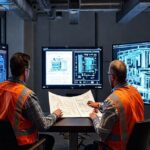

Optimizing Industrial Automation Control Systems for Newcastle’s Mining and Manufacturing Sector
As a major hub for mining and heavy manufacturing in Australia, Newcastle’s industrial landscape faces unique challenges. Harsh environmental conditions, evolving regulatory requirements, and the need for greater efficiency and sustainability put pressure on local operations to optimize their industrial automation control systems. This article explores proven strategies to select, implement, and maintain cutting-edge control technologies that address Newcastle’s specific industry needs and market trends.
Selecting the Right Industrial Automation Control System for Newcastle
Newcastle’s industrial facilities operate in a demanding environment, with extreme temperatures, high dust levels, and frequent vibrations. When choosing an industrial automation control system, it’s crucial to consider factors like system reliability, environmental durability, and ease of maintenance. Automation technologies like programmable logic controllers (PLCs), SCADA systems, and IIoT sensors can provide the necessary performance and flexibility to meet the unique requirements of Newcastle’s mining and manufacturing sectors.
When evaluating control system options, local businesses should prioritize the following:
-
Environmental Suitability: Ensure the system can withstand Newcastle’s harsh operating conditions, including temperature extremes, high dust levels, and vibrations.
-
Reliability and Redundancy: Look for control systems with built-in failover mechanisms and self-diagnostic capabilities to minimize downtime.
-
Ease of Integration: Choose solutions that can seamlessly integrate with existing industrial infrastructure and enterprise systems.
-
Regulatory Compliance: Verify that the control system meets all relevant safety, environmental, and industry-specific regulations for Newcastle’s market.
By carefully selecting the right industrial automation control system, Newcastle-based organizations can lay the foundation for improved efficiency, productivity, and sustainability.
Improving Efficiency and Productivity with Industrial Automation in Newcastle
Newcastle’s industrial leaders are increasingly embracing advanced automation technologies to drive greater operational efficiency and productivity. By integrating real-time monitoring, data analytics, and predictive maintenance capabilities, companies can minimize downtime, optimize resource utilization, and make informed, data-driven decisions.

One successful case study comes from a local mining operation that implemented a comprehensive IIoT-enabled control system. By integrating smart sensors, cloud-based data analytics, and automated workflows, the company was able to:
-
Reduce unplanned downtime by 25% through predictive maintenance
-
Improve energy efficiency by 18% through optimized equipment scheduling
-
Increase production output by 12% through better resource allocation
Another example is a large manufacturing facility in Newcastle that leveraged advanced PLC-based control systems to streamline its production processes. The company was able to:
-
Automate repetitive tasks and eliminate manual errors
-
Optimize material handling and inventory management
-
Gain real-time visibility into key performance metrics
These examples demonstrate how industrial automation control systems can help Newcastle-based businesses gain a competitive edge by enhancing efficiency, productivity, and sustainability.
Maintaining and Optimizing Industrial Automation Control Systems in Newcastle
Ensuring the long-term reliability and performance of industrial automation control systems is essential in Newcastle’s harsh operating environment. From routine maintenance and troubleshooting to software updates and workforce training, a comprehensive approach is necessary to keep these mission-critical systems running at peak efficiency.
Key best practices for maintaining industrial automation control systems in Newcastle include:
-
Implementing a proactive maintenance program, including regular inspections, calibrations, and preventive measures
-
Establishing robust cybersecurity protocols to protect against evolving digital threats
-
Providing ongoing training for operators and technicians to ensure they can effectively manage the control systems
-
Regularly updating software, firmware, and control logic to address vulnerabilities and leverage new features
By following these best practices, Newcastle-based organizations can maximize the long-term value of their industrial automation control systems, minimizing downtime and maintaining a competitive edge in the market.
Conclusion
By selecting the right industrial automation control system, implementing proven best practices, and leveraging the latest technologies, Newcastle’s industrial operations can drive greater efficiency, productivity, and sustainability. With the guidance outlined in this article, local businesses can future-proof their facilities and stay ahead of the curve in a rapidly evolving market.